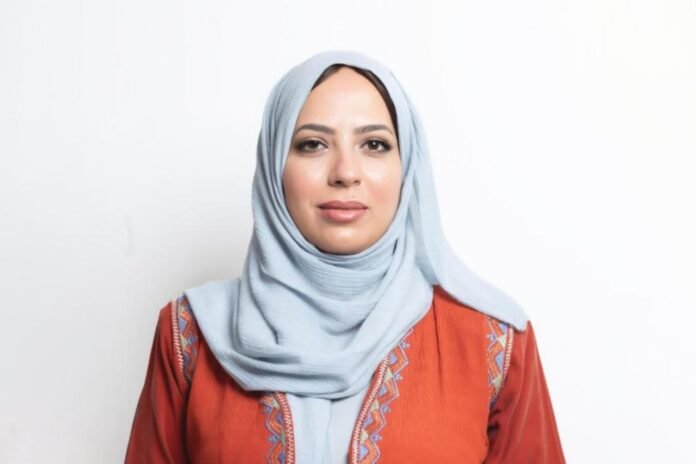
Her Excellency Intisar bint Abdullah Al-Wahibi, Director General of the Statistical Center for GCC States, affirmed that in light of the unprecedented economic, technological, and geopolitical transformations witnessed by the world, data and statistics have become a fundamental pillar in decision-making, performance measurement, and future foresight. They are no longer limited to measuring achievements alone, but have transformed into a strategic tool for understanding variables, directing policies, and enhancing the ability to adapt to challenges and seize opportunities.
She pointed out—in an interview with “Al-Roya”—that over more than four decades, GCC states have witnessed profound economic, social, and developmental transformations, which have been clearly reflected in statistical indicators and contributed to building a stronger Gulf economy, more prosperous societies, and higher standards of living quality.
Here is the full interview:
What do statistical indicators reveal about the path of joint GCC work?
Data indicates that GCC states have been able to build one of the largest regional economic blocs, with a gross domestic product of approximately 2.4 trillion US dollars, while foreign trade volume exceeded 1.6 trillion dollars, and Gulf sovereign wealth funds are estimated at around 6 trillion dollars, in addition to producing more than 16 million barrels of oil daily, while possessing approximately 30% of global oil reserves.
From a statistical perspective, these indicators confirm that joint GCC work is no longer limited to a cooperation framework, but has become a developmental path whose results can be measured in numbers and whose impact can be objectively tracked over time.
What do these figures mean on the global economic map?
The indicators reveal that GCC states no longer represent merely a group of national economies, but have become an economic bloc with global weight, possessing financial, investment, and productive capabilities that make it a major partner in the international economy.
This is not related only to energy resources, important as they are, but also to strategic geographic location, developed infrastructure, expanded investments, growth in services sectors and the digital economy, and increased capacity to attract global investments.
From a data perspective, an integrated reading of these indicators confirms that the Gulf has become an influential player in numerous global economic issues, whether in energy security, international trade, investment, logistics services, or finance.
The indicators also reflect an increasing capacity to adapt to global economic transformations, supported by ambitious national visions and substantial investments in economic diversification, digital transformation, and human capital.
Therefore, reading the data not only leads us to understand the position of GCC states today, but also helps anticipate opportunities that could strengthen this position in the coming years.
Has data become a tool for reading the future, rather than merely a means of documenting the past?
Undoubtedly, and this represents one of the most important transformations witnessed by statistical work in recent years. In the past, data was viewed as a means to record what happened, but today it has become an essential tool for understanding what is happening and anticipating what could happen.
When accurate and current data is available, and indicators are built that reflect economic and social trends continuously, it becomes possible to identify opportunities and challenges early, and direct policies toward the most impactful priorities.
Hence, the real value of data no longer lies solely in its production, but in its ability to transform numbers into knowledge, knowledge into policies, and policies into measurable developmental results. This is the essence of modern statistical work; it does not merely describe reality, but helps interpret it and provides decision-makers with more precise tools for planning the future.
For example, the common GCC market represents one of the fundamental pillars of economic integration among GCC states, since its official announcement in 2007, as an advanced phase following the establishment of the free trade area and customs union, paving the way toward comprehensive economic unity.
In this regard, the path of economic, investment, and service activities witnessed notable expansion by the end of 2024, with the number of public shareholding companies whose shares are permitted to be traded by GCC citizens reaching approximately 748 companies, representing a growth rate of 30.3%, while the total capital of these companies rose to 549 billion US dollars, and the number of shareholders in these companies reached 246.6 thousand shareholders, with the principle of non-discrimination being applied, in addition to enabling GCC citizens to trade and purchase shares and establish companies in GCC capital markets, which strengthened the depth of financial markets and raised the level of interconnection between them.